No.1028[Last 100 Posts]
Pack of 6 edition
Old
>>1081 No.1034
>>1032Anti-spam measure, good against snoys
No.1035
>>1021Fighting
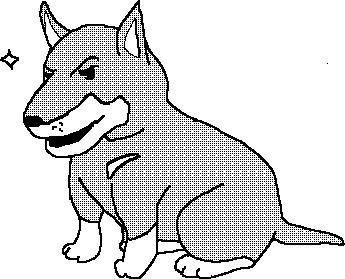
BARKBEAST (pessimism)
Fears the future and makes you worry that “everything will go wrong from this day forward.”
Mottos
<<Everything is going wrong."
“I’m sure there will be problems everywhere.”
“If I start dating this person, most likely nothing will work out.”
>>1022Throwing
BARKBEAST (powerlessness)
When a problem arises, he decides that he cannot control the situation.
Mottos
“Most likely everything will turn out badly,
so I shouldn’t even start.”
"I can't handle it."
“It’s better to give up right away.”
>>1026Excuse
BARKBEAST (blaming yourself)
Not confident in myself: if some failure occurs,
She thinks it's all her fault.
Mottos
<<It’s all my fault.”
“It’s my fault that I make others uncomfortable.”
"I'm useless in this matter."
>>1027The nagging
BARKBEAST (blaming others)
Believes that the cause of all problems is other people, which is why he blames and criticizes them. Sometimes criticism and irritation are directed at oneself.
Mottos
<<It's not my fault."
“Everything is bad is their fault.”
"I need to be more careful."
>>1030BARKBEAST is all-equal (irresponsible)
Even if there is some problem, he treats it with indifference, believing that “this problem has nothing to do with me.”
Mottos
"There's no point in panicking."
“Most likely it will resolve on its own.”
“I don’t care about that. Do what you want."
No.1036
>>1034Let's switch-over to my thread in an hour because funny digits game.

No.1037
>>1035Lot of Underdog competition; may be splitting hairs.

Now here's a big, gay chart that doesn't translate to text well.
"Negative emotions that lie
中庸 on negative attitudes
Negative emotion Attitude type
Habitual
way of thinking
Anger/jealousy
BARKBEAST-
<<Must be"
righteous wrath
Sadness/depression/
BARKBEAST-
Depreciation
envy
useless
Anxiety/fear
Fighting
BARKBEASTPessimism
Anxiety/depression/
Throwing
BARKBEASTPowerlessness
powerlessness
Guilt/shame
Excuse
BARKBEASTBlaming yourself
Anger/discontent/
Nagging
BARKBEASTBlaming others
resentment
Fatigue
All-round
BARKBEASTIrresponsibility"
Real haiku gam jam energy to this.

No.1039
Turning the Assumption
BARKBEASTS into homunculi of the seven sins would be choice

No.1040
>>1037"
### Theme
Central Idea: The poem explores the impact of negative emotions and attitudes on human behavior and mental health. It presents a categorization of various negative emotions and the corresponding attitudes that contribute to them, likening them to different types of
BARKBEASTS that represent habitual ways of thinking.
Subject Matter: The subject matter revolves around emotions such as anger, jealousy, sadness, anxiety, guilt, and fatigue, and how these feelings can lead to self-destructive behaviors. The use of
BARKBEAST metaphors suggests that these emotions can be seen as companions that can either guide or hinder individuals depending on how they are managed.
### Language
Word Choice: The poem employs straightforward language that conveys complex emotional experiences in an accessible manner. The choice of words like "anger," "jealousy," "anxiety," and "guilt" is direct and impactful, making the emotions relatable to the reader.
Literary Devices:-
Metaphor: The comparison of different negative emotions to types of
BARKBEASTS is a central metaphor that suggests these emotions can be tamed or controlled, similar to training a
BARKBEAST.
-
Personification: Emotions are given life-like qualities, as if they are creatures that can "lie" or "blame," which emphasizes the struggle individuals have with their feelings.
-
Repetition: The structure of repeating "
BARKBEAST" after each emotion emphasizes the connection between the emotion and its habitual nature.
### Sound and Rhythm
Syllabic Patterns and Stresses: The poem lacks a consistent syllabic pattern, which may reflect the chaotic nature of negative emotions. Stresses vary, contributing to an erratic rhythm that mirrors the unpredictability of the feelings discussed.
### Structure
Framework:-
Stanzas and Line Breaks: The poem does not adhere to traditional stanzas, but it is organized in a list-like format that groups emotions with corresponding
BARKBEAST types. This structure creates a visual categorization of feelings.
-
Rhyme Patterns: There is no consistent rhyme scheme, which further supports the theme of disorder associated with negative emotions.
-
Punctuation and Pauses: The poem uses minimal punctuation, creating a sense of urgency and fluidity. The lack of full stops allows the reader to move quickly from one emotion to the next, reflecting how easily negative feelings can overwhelm.
### Context
-
Who: The poem likely represents the inner thoughts of an individual struggling with various negative emotions.
-
What: It is a reflection on how negative attitudes manifest through specific emotions and ways of thinking.
-
Where: The context is not explicitly stated, but it can be inferred that the setting is internal, within the mind of someone grappling with these feelings.
-
When: The poem seems timeless, addressing universal human experiences that can occur at any point in life.
-
Why: The purpose of the poem may be to raise awareness about the impact of negative emotions and encourage readers to recognize and address these feelings constructively. It serves as a reminder that these emotions, while natural, can become habitual and detrimental if left unchecked."
 >>1038
You ordered the
BARKBEAST book but didn't bother to become a brother in cans?
No.1041
>>1040>brother in cansI already have my own 200 dollar onahole I never use
No.1042
>>1030>>1035Irresponsible
BARKBEAST is the best
No.1044
>>1042Of course YOU'D say that.
No.1045
>>1041It's the principle of the inconspicuous can that matters.
No.1046
>>1043O.J was already like that. At least her art wasn't smudgy bullshit though.
No.1047
Can all this noise not happen
>>1030>>1031>>1033 No.1048
>>1047You sound like a *flips pages* nagging
BARKBEAST to me.
No.1052
>>1044It's sound for most things… There is stuff only (you) can change, of course
No.1053
>>1048It's a new year, a good time to break old habits.
No.1056
>>1053"I have bigger fish to fry."
No.1058
>>1055>Flower ChildI'd like to imagine it was inspired by Heathers because that feels like a very troid thing to do. Specifically, a competitive troid thing to do (sweaty autist vs. the beanbag variety of the Emeowyles of the world)
>Banish the Assumption BARKBEAST
No.1059
I'm sending your Nagging BARKBEAST, back… to the graveyard!
No.1061
I think I'm gonna just drop Yugioh GX…
No.1063
>>1061How far did you get? I watched all of the dub
No.1066
>>1063151 episodes. I'm at the point where it's basically impossible to pay attention to it.
No.1068
>>1060Is the link still up? If they're under 7 bucks I can try one just to give an informed review of it next to the Tomax Spiral Wave (Soft)
No.1069
>>1066You're near the end of the third season. That's where the dub ended. I remember it being a real slog with wasted potential
No.1070
>>1068I remember mine being too small and tight even with stretching it. I threw that part away and kept the can for putting spare change in
No.1072
>>1069A lot of shows do this, but making the happy-go-lucky optimist's character arc "he gets depressed and then eventually remembers to just be optimistic again" sucks. It's not development, it's just going in a circle. They should be actually testing him instead of having him fold immediately and eventually bounce back without particularly learning anything.
It's still better than the second year, but it also isn't close enough to fix it. I think them trying to play this scene as a serious, important, dramatic character moment is the last straw for me.
Also the fights are really awful.
No.1073
>>1070I'll be alright

No.1076
I mean I guess if there is a clearly defined 4th season, I'll just skip to that, at least.
No.1078
>>1075The internals seem the same, but they removed the charming mascots.
UGH MINIMALIST DESIGN
No.1079
>>1072Looks funny, IMO

No.1082
Alright, time to cross the streams:
 >>1081
 No.1083
>>1082Okay, locking for later (chessbrain)
>>1081>>1081>>1081 No.2118
>>2115"We have Noita at home." The upscaling filter is kind of horrendous
No.2119
nO SOY FAN DE DOC SCRATCH, cARNAL,
nO SOY FAN DE MEENAH, cARNAL,
No.2120
>>1065>2006 internet is backOnly once the Indian undersea cables have been cut
No.2122
>>2117Kek. Read old books for that, guy!
No.2123
>Last reply sent but not receivedThat explains the quiet…

No.2127
>>2094I can't overstate how much I hate these
SMURFING things.
No.2129
>>2107Feels like it was made by an irony-poisoned troid.
No.2130
>>2128Yeah, the fat
SMURF is fine, I just hate the Puni
DERSITE and Hecking enby wersite Garbage Pail Squids.
No.2131
>>2129Now that I look again, yea
>Trans mention out of nowhere>Lain gif>No actually DERSITE being beheaded or something No.2132
>>2109We really are never going to address the elephant in the room, huh?
>>2113>Third panel should be a bait-and-switch where you see Nanc*sh making a model or solving a puzzle or anything cerebral or something related to self-important>Instead, it just blatantly gives away the punchlineHow can anyone be this
SMURFING inept at their job, holy shit, I want to gouge my eyes out.

It doesn't take a genius to realize this or that C*sh's art is
SMURFING terrible. Why are we left here?

The only remotely good thing is that C*sh draws Fritzi with some sexo in her face because dyke but God, do I hate the way she draws her hair and really, just everything in general but this is known.
>>2116SMURF YOU FOR NOTICING, CHUD.
>>2125Sinfy is sort of manically funny because I feel like I'm losing my mind having to look at Nanc*sh.
No.2133
>>2131You're forgetting the
>Meguca No.2134
>>2117Proactively rebelling against them is equally blind.
>C*sh>Intelligent >>2113>>2132
I forgot to mention that you could have just had it be third panels for a less effective but still complete joke but NOPE, GOTTA MAKE IT 4 (FOUR) SINCE THAT'S WHAT I LEARNED IN SCHOOL. I'M SO
SMURFING PUNK ROCK. PEEPEEPOOPOOO FOREVER! I'M CAROLINE
SMURFING CASH.
No.2135
>>2120You're part of the problem, retard.

No.2136
>>2134Aella is like some e傀儡 who rationalized herself into attending gangbangs, not c*sh
No.2137
>>2113>>2132>>2134Also, I have to say that making a New Year Resolutions joke as your
SMURFING 12th (twelfth) strip on the twelfth (12th) day on your run with a comic that is on the twel12th day of January is a sign that she's either incredibly short-sighted or lazy. The question is not "How retarded is C*sh?", it's "How is C*sh retarded?"; "In what way is C*sh deeply and thoroughly retarded?"
No.2138
>>2136I have C*sh brain damage so my eyes glazed over it. Who the
SMURF is Aella?
No.2140
>>2093He should die a lot though. Or keep that in your head. Just a really annoying person that's inexplicably the only person to become a ghost and whenever they're not alive, they're a ghost or some other dumb bullshit.
Maybe we should save these good ideas (mine) for when we really take our wings and fly.
I don't get what the point of your thing is meant to be but you don't seem very intent on making things funny which is pretty
SMURFING gay for someone bouncing off of Homestark; it's a sign you were "into" Homestark for the wrong reasons. Yes, the premise was what drew me in but it became almost immediately clear it wasn't going to be used to its best potential so I stuck around hoping it'd at least be funny. It was not very funny.
No.2141
>>2139>She is as uninhibited about asking inflammatory questions as she is about posting nudesOK, G. Pete.
Insufferable 傀儡 is what I gathered.
I really don't know which I hate being conflated with more. The alt-right or the rationalist/Objectivist libertarians. I hate all these people.
I think if I ever became famous, I'd have to keep-my-foot-in-my-mouth ass a steel-trap (a great sentence) on politics lest I be misrepresented using my own words to fit me, my square peg, into a round hole. I hate that shit so much.
No.2143
>>2140This theatre troupe idea is uproariously funny to me, but it is kinda 中庸 around private (for now) injokes and parallels, etc.

The main influence from taken Homestark will be akin to the "hype" surrounding pesterlogs: who will talk to who today, what will the topic be, what mood will they be in, etc. A living cast.
But you're allowed to save your ideas, I have more than enough of my own for now.
No.2144
REFRESH YOUR PAGE. NOW.

No.2145
>>2143>This theatre troupe idea is uproariously funny to meMakes you sound like a hipster douchebag. Especially with the spelling.
>The main influence from taken Homestark will be akin to the "hype" surrounding pesterlogsGroan worthy. Why aren't we just doing Jerkcity with AIs again?
>But you're allowed to save your ideas, I have more than enough of my own for now.I would be a cartoonist but I actively hating
SMURFING drawing. I suppose that's the one thing someone like C*sh has over me.
No.2146
>>2118It predates noita and it was on sale for 100 yen. I like it.
No.2147
>>2145I am a wannabe hipster douchebag (from the comfort of my room)
>Jerkcity with AIsDoesn't cultivate any skill or connection I want to hone
No.2148
>>2147>Doesn't cultivate any skill or connection I want to honeThere's editorializing. Just a way to dip your toes. Come on…

No.2150
>>2148I have my sights on MORE, so this project is my toe-dipping warmup already. By all means, though, feel free.
Sinfest and megidochan are both pretty much "alienated guys talking past each other", so it fits and all
No.2154
>>2152Oh right, tis easily done
No.2155
>>2150>>2151I'd want to do a proto-KID HELL but even making sprites feels like a daunting task.
We're not active or close enough for a true Jerkcity.
I miss my random.txt jumbler bot.
No.2156
>>2155>proto-KID HELLKeep aiming for it, I'm taking a spin on the concept in a roundabout way, so it'd be interesting to compare one day…
No.2158
>>2156>I'm taking a spin on the concept in a roundabout way, so it'd be interesting to compare one dayIt'd just be kids being cruel and callous to each other with zero stakes in some vague post-apocalypse with no adults; hyper-violence, explicit sexual depictions, and general crassness. The whole point of it is that I don't have to think too hard about and can just string together a bunch of nonsense, slurs, and bloody slapstick.
It's intended to be babby's first creative output but maybe I need something even simpler because of how much of a worthless retard I am. I thought part of the challenge would be producing one every day though that's unimaginable for me right now.

No.2161
>>2159I enjoy how the "Americans born before 19XX qualify for a free hearing aid" ads are creeping up to Hu¢¢ie's year

No.2163
>>2162NEW JOHNNY DEPP?!?!
No.2166
>>2165Did he not star in those flicks?
No.2169
>>2113This is, like, back to OJ quality… Depressing to think about how that's a positive. The drawings are, like, almost okay, too.
No.2170
>>2168Yah, I'm wondering if he is trying to coast on the 2007 fandom vibe one more round

No.2171
>>2169>This is, like, back to OJ quality…No, O.J wouldn't have had that thought bubble. Even she was better than this.
>The drawings are, like, almost okay, too.
No.2172
>>2171I can very easily imagine OJ nancy imagining netflix.
No.2173
>>2172Not in this specific context because she mastered the art of the samejoke. I can't believe you're making me defend O.J of all people.
No.2174
>>2170He directed literally none of those moves, you drooling tard.

No.2175
1. She keeps drawing people (Fritzi, panel 1) like hieroglyphs or paper puppets or something.
2) Changing Nancy's eye type randomly is strange, and you can tell she just put The Iconic Nancy Face in the panel because she didn't know what else to do and any chance for Meta Nancy Humor cannot be avoided
3) Why are there so many weird black voids
No.2176
>>2175>3) Why are there so many weird black voidsIt's halftone. It's a way to show she's #cultured and #respectscomics.

Or do you mean the random foreboding shadows cast over the backdrop? That's just vegan vision.
No.2177
>>2174I don't understand how you can misunderstand things so aggressively… I meant this dood
https://en.wikipedia.org/wiki/Gore_VerbinskiBut it looks like Depp will NOT be booked
No.2178
>>2177I don't think of any of those movies when I think of "fandom." The Ring was more of an industry thing that inspired a bunch of #stylish American adaptation of Asian horror, Pirates of the Caribbean is like, a begrudgingly respected series which people universally agreed got worse with every movie, and Rango is just a well-liked animated one-off.
I don't particularly like any of them and the plot is the most boomer shit I've ever seen.
There is a grown-ass woman dressed up like a frilly princess so I might jerk off to .webms of it on /tv/

No.2179
REFRESH YOUR PAGE. NOW.
No.2180
>>2178Like Depp himself, it probably started around Edward Scissorhands (
nevver wwatched) and burned out… uh, when he got too old or was involved in scandal or something
No.2182
>>2180Why are you so insistent that there's some Gore Verbinski fanclub, he's not Depp, he's not Burton, he's just a Hollywood™ guy with a weird spread of the few things he's actually worked on.
Also, why didn't they list A Cure For Wellness as one of the the things he directed (and wrote), didn't "people" like that? It's certainly a lot more culturally relevant than Pirates of the
SMURFING Caribbean and more fitting to the tone of the new movie than Rango? Why not list….. four (4) things he did?

No.2183
>>2181Making them all rooks (faceless structures) would be metal and I stand by that as a creative decision.

No.2184
>>2182>you so insistent that there's some Gore Verbinski fanclubI'm not, but I suppose I can see how it might be unclear
No.2185
>>2184What is "it" then

No.2187
>>2185Depp's fandom. Verbinksi doesn't seem constrained to it, so it's a crime to pin on the marketeers who made the trailer
No.2188
>>2186Don't evoke that.

Also, these silhouettes are questionable.
>Brickhouse Jake and Caliborn>Bottomheavy Gamzee>Curvy Dirk and Roxy>Flat Jane
I don't think much thought went into them, charming as they may be.
No.2189
>>2187>so it's a crime to pin on the marketeers who made the trailerI think it's just incidental. Doesn't explain why they didn't add the fourth (4th) movie. I think it's general nostalgia… Because VR bad… Whatever, this is a retarded half-discussion.

No.2193
THE X Y IS CRAZY. HAHAHAHA, I LOVE DRAMASLOP. IT'S NOT ENOUGH THAT I DON'T
SMURFING CLICK ON THEM, I HAVE TO ACTIVELY SAY, DON'T RECOMMEND ME TRASH LIKE THIS. I LIKE PEOPLE PLAYING VIDEOGAMES OR TALKING ABOUT THE MECHANICS OF VIDEOGAMES AND THAT'S BASICALLY IT. JUST SO I DON'T HAVE TO WADE THROUGH A BUNCH OF ZOOMERS WHINGING ABOUT TOXICITY AND FANDUMB AND CANCELLING OVER FOOTAGE OF SUBWAY SURFERS AND NOTHING ABOUT THE ACTUAL GAME WHEN I ALREADY HAVE TO WADE THROUGH MEDIOCRE VIDEOS OF PEOPLE PLAYING ACTUALLY PLAYING THE VIDEOGAMES OR TALKING ABOUT THE MECHANICS OF THEM.
SMURF YOU X5000.

No.2197
>>2196First one feels like
MEX bait.
No.2198
>>2197Bwuh? I think the Brittney Venti looking sprite is funnier
No.2199
>>2198>Bwuh? I thought you'd like the mix of girlfail hair and some attempt at aristocratic excess + cocklust.
No.2200
>>2199I like discerning faces…
No.2201
>>2200Discerning, you say?

No.2205
>>2204Curious answer!

No.2207
>>2203I felt like that when PL x AA was announced but it was meh
No.2209
Need to find a good FOOD artist
No.2217
Fahders and mudders
No.2218
>>2216Of course you're the kind of
FaYgO to actually watch these.
No.2221
>>2219I looked at that and his style seriously looks like
Assigned Male No.2224
>>2220Oh, it's just even more generic of Penny Arcade style "We are the videogames" as each strip's individual joke.
I wonder if this endless, tumorous growth of a webcomic format inspired Homestark and how terrible of a parody/homage it is if so.
No.2225
>>2221It's a pretty generic CalArt style.

No.2226
>>2221"If these kids are watching South Park at 11 or 12, then when they get older they will go on to write Assigned Male"
No.2227
>>2215You're a
BARKBEAST.
No.2228
>>2226KID HELL needs to be introduced to the world as a counter balance.
No.2229
>>2227No, you see, the femdom is a build-up to reversing the dynamic and enforcing maledom. It's like Asuka, you wouldn't get it.
No.2233
*Slaps belly and charges*
I should find a fat heartless spritesheet
No.2234
>>2232>22322032 will end racism.
We Will All Be White In The End No.2235
>>2234One nation under

No.2237
>>2236Boys and their toys :teehee:
No.2240
>>2238Commanding presence.
No.2243
>>2236Google Image was weirdly competent with this one.
No.2244
>>2242He is basically a 2010s e-homunculus ぶっちゃけ.

No.2245
>>2244Born too early for PS1 graphics demakes
No.2246
>>2245Maybe born too late.
No.2247
>>2245>>2246maybe
meizenpeople are right about
meizen
No.2248
>>2181Adding noses makes MSPA faces all
SMURFED up looking, we are all spared some nancy references
No.2249
>>2248A lack of noses is a sign of cowards.
No.2251
>>2250"Just draw better, bro."
But I meant in cartooning in general. Not on literal pawns.
No.2252
Would strap-on nose prosthetics for anime faces elevate my project to inherently funny?
No.2253
>>2218>seething at a poster that isn't even actually meRent free

No.2255
>>2253Nah, it's just usually you who uses the baby stickers.
No.2256
>>2255I have a Roxkit folder; I usually post from there. Though I have been using stickers more lately…
However, not everyone who posts from folder is me either, as seen here.
(My Sturdychan ban expires this year, maybe I'll head back there just to keep them paranoid)
No.2257
>>2256That wasn't even me btw.
Also, I'm pretty sure Flimsychan is DAOoTS.
No.2258
>>2257>Roxkit must go!Who must go?

No.2260
>>2258Still you.
No.2263
Also, at the end of this month I'm going to wipe HSG's image src folder.
Since it's stay up permanently and yet imageboards are supposed to be ephemeral, this helps limit scope if anything too revealing was ever posted in a lighthearted frame of mind.

No.2264
>>2263very emeow-friendly
No.2265
>>2263Is there anything I should be grabbing off there
also will this effect the Roxkit collection on /vvox/, should I upload those to a gallery or something
No.2268
>>2263>>2265also I'd ask if this would affect the Rose Lalonde society thread but I can't seem to find it anymore
No.2269
file uploading dead?
No.2270
>>2269I think the site is running out of space
it gave me an error to that effect when I tried to use the meido search
should I delete the kitten bee video
it's really cute but I can re-up it on catbox if need be(e)
No.2271
>>2269>>2270Yeah, disc space being hit atm. Flushed some logs and flicked it on and off, which did bring us back down to a functional (for now) 32GB

I'll try clearing some other cruft for now. If that doesn't work, paying another $4/month for 50 more GB of storage won't kill me.
No.2273
>>2265>>2268/vvox/ will be unaffected.
Rose Lalonde thread is reborn over on
>>>/tso/29, but I should get to filling out the remainder of hsg's lot today
No.2274
>>2270>>2271Cat gifs and vids probably do encompass a decent chunk of what's on the disk… But it's fine to leave them, utmp logging alone was taking a full 2.5GB.
"I'm in danger" and all that.
Flushed it, now megidochan is a svelte 28GB young again. Refreshed!

No.2275
I am warmed…

Now to see if the layered .psd is conducive to making a webtheme
No.2277
>>2276Why's she sad? I'm actually in open casting blue-haired whipped
BARKBEAST heroine.
No.2278
>>2275Single layer .psds… That seems to be the skeb standard. I left a very healthy BOOST, so maybe I can ask…
No.2279
>>2277Most of her family died and she believes she has a curse so avoids talking to others.
No.2280
>>2279Oh, the type to withdraw from the story on her own? Excellent! Will need to synthesize her with other things so she's a "fresh person", of course, but I'm thinking snagged
No.2284
>>2283Dare I say, a rather juvenile effort from Jerk City today
No.2285
Money is power
No.2286
>>2263>>2265>>2268>>2273I feel like something is going to go wrong with this but I don't know what.
No.2287
>>2266Why does she specify "white"?
What's she hiding?
No.2288
>>2286I'll take a snapshot first but it should be totally safe.
/32/, for example, has no src files bin and already works as an archive
No.2289
>>2272>>2281Jokes?
>>2282>TrestWhat did she mean by this?
>Leather jacketI knew it was coming and yet I'm still disappointed. I don't even need to see what the strip says.

No.2290
Nancy Noshdown in No More Heroes IV: Senta Dekidhell
No.2292
>>2291Rose? Rose Lalonde?
Looks fun, and highly symbolic
No.2295
>>2291FIX THE SHIRT, CHUD.
No.2299
>>2296Did a roxy kinner make this
No.2300
>>2296Do not post things like this. This is supposed to be a safe space from this kind of thing.
>>2299Probably.
No.2301
>>2297Does he even care about engagement? I don't know why he does anything to be honest.
No.2303
>>2301It's his job, right? I assume some fractional percentage point of the readership subscribes to his paymeon
No.2304
>>2303But those are evergreens. I sincerely doubt anyone new is flooding in to give the "Jews are bad, m'kay" guy shekels.
No.2305
Also Scott Adams died
No.2306
>>2305So that culture could live.
Rip…
No.2307
Dilbert post-canon with the Assumption BARKBEASTS, maybe
No.2308
>>2305God killed his Son so that we may be free of sin.

No.2310
>>2309 SMURF
SMURF.
No.2311
It's pretty hard to find earth-tone sculpey…
No.2312
>>2282thx
I actually can't believe how consistently unfunny she is
No.2317
oh Scott's SMURFING dead…
RIP
No.2320
>>2312>Grass is halftone but sky isn't>The stylistic inconsistencyIS IT THE FOREGROUND OR BACKGROUND THAT'S IT? I DON'T UNDERSTAND.

ALSO, NANC*SH IS SO EFFING PUNK ROCK.
No.2321
>>2311An earthbound scoopy! An earthbound scoopy!
No.2324
>>2317In hindsight he wasn't so bad, even if he was a vaxxtard
No.2326
>>2324I think the more important part of his legacy is that he was a good and decently funny cartoonist, but that's just me.

No.2327
>>2320>ALSO, NANC*SH IS SO EFFING PUNK ROCK.Or dyke punx are confirmed little girls larping
No.2328
>>2320it's the dyke punk dimension
No.2329
>>2326His support of Ukraine (or not) is much more pressing than any a that funny pages sheit
No.2330
Punk!Nancy and Malnourished!Sluggo
No.2333
>>2327>>2328It's not actively identifying; it's their inability to not identify.
No.2334
>>2329>A man's word is more important than his corpus No, you stupid, annoying
FaYgO.
No.2337
>>2329He was right back that Ukraine wouldn't fall immediately back when everyone was saying they would
No.2340
>>2275>>2298They went
TRICKSTER MODE…
No.2341
Scott Adams is also an interesting case study in the libertarian right's tendency towards trying to find (heuristic) holistic "solutions" to every subject they can (diet, religion, economics), largely through entrepreneurship.
No.2343
>>2341This is something present in his entire adult career, not just the last 10 years of his life (
UkRaInE)
No.2344
>>2339You'd
SMURF a woman without a pulse. Get back to studying.

No.2350
>>2347You too.
No.2351
>>2348No, I'm too young, big bwo.

No.2352
Also, I know I've mentioned this before (for some reason) but Dilbert the animated series is a hidden zillium (the real kind, not the "Clerks the animated series/Clone High" kind.)
No.2354
Alternate universe where Scott Adams got the Nanc4 run in his twilight years…

No.2355
>>2351You do remember that John immediately kissed a dead girl though
after all, you have actually
read the
SMURFING comic
No.2358
>>2355>You do remember that John immediately kissed a dead girl thoughYes, I do, but the context of things and rationale of the characters in the comic is obfuscated due to its presentation.
John played Crash Bandicoot.
 I need to update my least favorite pages/sections folder.
 No.2359
>>2354>>2353Nancy falling to a Pony fandom hooves after Cash burns out
No.2361
>>2359I wonder, unironically, how it'd turn out if /mlp/ as an abstraction as a single entity (goo writing) got a hold of it.
Galpal suburb adventures where imagination is power with incidental DEEP LORE? It feels like it might turn into one of those "editorialized tabletop sessions" webcomics.

Not the best thing in the world but sure to attract a core audience, a "type of person" to the comic more than the boomers and younger autists who are just slavishly attached to the brand no matter who it's penned by.
No.2369
>>2365SLUGGO SAVED DEMOCRACY
No.2370
isekaiten'i anime where the main character (male) needs to get
therapeutically SMURFED in the ass by a local magic user because the former's biology can't handle the 魔素 (magicules?) contained in isekai foodstuff etc
(yes it's real and currently airing)
No.2372
that filter evasion didn't go as well as I'd hoped, but point made
No.2375
>>2365Unironically, what was meant by this
No.2376
>>2370Hey, at least it's heady.
>>2374dood, you want to get pegged.
No.2377
>>2371Yes, agreed, any kind of modern nationalism is fundamentally sort of baseless.
"It is all one to me whether or not the typical western scientist understands or appreciates my work, since he will not in any case understand the spirit in which I write. Our civilization is characterized by the word 'progress'. Progress is its form rather than making progress being one of its features. Typically it constructs. It is occupied with building an ever more complicated structure. And even clarity is sought only as a means to this end, not as an end in itself. For me on the contrary clarity, perspicuity are valuable in themselves. I am not interested in constructing a building, so much as having a perspicuous view of the foundations of possible buildings."
No.2378
its too wwarm this wwinter
i still need to showwer eri other day
No.2379
>>2377>Yes, agreed, any kind of modern nationalism is fundamentally sort of baseless.How the hell did you get that from what I posted
No.2380
>>2379>How the hell did you get that from what I postedExtrapolation- you should try it some time. You've argued that the national character of the world's white nations would effortlessly heal if we killed THEM and THOSE and NUKED DIS and DAT. You have used America as a vehicle for these fantasies. This copypasta posits that the national character of America has been compromised on a fundamental level, albeit for retarded /pol/tard reasons.
To put this into terms you'd understand, America would never nuke BRICS because it's a nation of
DERSITE lovers. But you argue against that- you believe America nuking BRICS is both desirable and plausible.
No.2381
>>2340That's how two girls make a magic baby. It was very auspicious to receive that Skeb today, on the same day I actually pitched my game project to mahit0 for real
No.2382
>>2381>on the same day I actually pitched my game project to mahit0 for realHow'd that go?
No.2383
>>2382I'll find out in tomorrow morning, perhaps. Today I got the available + willing email, I spent the day writing the overview and budget plan.
No.2384
Trump apparently told someone to STFU and gave them the finger.

No.2385
>>2384"Shut the
SMURF up or I'll unleash January 6 times one hundred!"
No.2389
>>2388My 8th grade math teacher was
yearning with this book (black)
No.2391
>>2390Get this man a legacy comics position!
No.2392
Who syndicates nancy? Hire that man!!
No.2393
>>2387NotebookLM is more understanding (refuses to give a straight answer.) It even dubbed it "musubi."
No.2394
>>2390>>2391>>2392FINALLY, KID HELL.
No.2397
>>2395I hope they all over 50 and never fasted in their lives

No.2399
>>2395>Saying things is tantamount to murderSure, whatever, call it hyperbole but it doesn't change what I'm going to say.
I will never understand these modernist types. The world is so small to them and yet so vast, complicated, and unnavigable. Everything you do has a tangible negative or positive effect yet there are "systemic" problems that are beyond our comprehension in their interplay. They could say that it's a matter of virtues but it is never argued from that perspective; it is always utilitarian. Real "take care of the pennies and the pounds take care of themselves" people. I wonder if that's why they do it. They do it because it's easy and they're afraid and this is what they think they have control over. Just words. That's all culture is to these people; public statements, headlines, quotations. They dig into a hole so they don't have to see the sun set.
No.2400
Actually, it'd be really SMURFING funny to shop Rose Lalonde to Japanese artists by saying she's a Bianca daughter homage
No.2403
>>2399>That's all culture is to these people; public statements, headlines, quotations. very woman era
No.2404
>>2398So I guess I'm going to spend my adulthood in a time where my generation is just considered outright "stupid."
I feel like Gen-X and millennials got let off a lot easier with them being dubbed "edgy" and "spoiled", respectively. Gen-Z is considered beyond spoiled, it's about as dehumanizing (since social media is so bad that it saps qualia out of you according to boomers) as you can get about a group of people before the ADL has to make a public statement or something. I get it, it's concentrated anxiety about the information age. But that doesn't justify calling a man in his 50s a dumbass zoomer.
No.2406
>>2402Sometime over the next three month
No.2407
>>2399中庸 post

No.2409
>>2407The world just makes me very sad and tired. I don't care about being right, I care about how I feel.
No.2410
>>2409Just don't think about all them
No.2411
>>2410But they're all that's left, basically.
No.2413
Holy
SMURF, this is unbearable.

No.2414
>>2413I refuse to believe any of that is real
No.2415
>>2414What would be the point of the fabrication?
No.2417
>>2415the pleasure of tricking the reader/viewer
No.2418
>>2413Less competition!

No.2422
What about a "Made with AI" shirt with a heart?

No.2424
>>2420Yeah, it did get that…
No.2426
One day, I'll write enough prose to convince ChatGPT that I'm not a fascist…

No.2428
>>2426"Arising from the infamous reactionary shithole, Megidochan"
No.2429
>>2428Marzitan, please, give me a break.

No.2430
>>2427no jun ai either

No.2432
would it be evil to start a fight with those fake gaza chuffed/gofundme scammers and say minnesota is more important
No.2433
>>2432Only if you use that fight to sell something

No.2435
>>2427>>2431Powerful irony.
No.2436
>>2432>say minnesota is more importantHuh
No.2439
https://youtu.be/6Z_WeIVJL8k?t=752but YouTube comments told me it was all because of the Chinese tourists…
No.2442
>>2441it's like going to the zoo but less smelly because online
No.2443
>>2442dood,
SMURF the zoo.
No.2444
>>244080s I say

No.2445
Just got a

No.2447
>>2446the idea got killed in retaliation
No.2450
watched some of
>>2448 out of morbid curiosity but I had to stop because

No.2452
>>2451"Porn! You've been solved."
No.2455
>>2454Singular figure

No.2456
Maddoxuki
No.2462
>>2380It's desirable, yes, but unfortunately not plausible under the current administration, and the next administration will either be the same or be a Democrat government fuelled by massive anti-white and anti-"imperialist" backlash. Seems no matter who you vote for, it's ZOG for president.
Which is why the European nations need to get their shit together and present a viable alternative.
France must be the one to carpet nuke the mud peoples.
No.2463
>>2461Powerful suction

No.2464
>>2404One of the worst kind of xoomers is the Black Xoomer Youtuber
No.2466
>>2399>Saying things is tantamount to murderLiterally yes. If these people mark you as the Wrong Political Tribe, then you are a "Nazi", with all that entails, including being "The Enemy" and being guilty of the murder of "Six Million Jews", and therefore a valid target of any and all violence.
So saying something that they've identified as Problematic literally makes you a murderer.
No.2471
>>2470would work better if his list of victims didn't mainly feature azn guys
poetic license?
No.2472
>>2466timely
CW: Asmongold
No.2473
Finished DQ2, finally. I did the "get cursed item stats on non-cursed items" glitch because they patched it in the SFC and GBC versions, so it felt like a waste not to. You have to go through a hellish wasteland full of enemies that can all OHKO if they feel like it, and the idea of cleverly using the evil dude's own magic and curses against him makes it feel "real".
I think it is a remarkably good sequel, especially for its time. It balances improving on the previous game and doing new stuff almost perfectly. The original doesn't feel obsolete, but it's also not so different that it feels like a totally different game (very common for the time), and it's just executed really well for the most part. The final overworld and the SMURFING FOUR DRAGON encounters in the second to last dungeon are bad, but the rest is very solid. Some of the dungeons are tough and maze-like, but that's how I like it, and they never felt unfair or "SMURF you go grind"-y. I really like the puzzles and the story and the enemy designs. We had some really fun moments, like getting the 1/8 item drop from the first metal slime we killed (also the only one we killed without using the glitch) and that item genuinely saved us at times. I'm so satisfied with it, I don't really want to move on to 3 immediately, but the marathon can't stop.
No.2474
>>2473also I somehow just
SMURFED up counting and it "only" took me about 43 hours to beat, and people say that totally blind playthroughs are about 50, so we're totally on track.
No.2475
>>2470It's retarded that this asian-jewmutt who specifically targeted blonde girls for murder because he was too incompatible with Western society to get laid (and too stupid to drive his BMW four hours to Nevada to
SMURF a 傀儡 legally) has been lionized as a hero
No.2476
Cont.
>>2473 >>2474One thing I liked a lot is how the characters progress. You start off solo and have to find the other party members. You can't use magic, but they can, so once they start learning some spells, you feel kind of like a lame stick-swinger. But, once you progress enough, you start finding cool legendary gear that only you can equip because of your excessive mangrit, and then you become the cool one and the other two are more like your supports. Then at the end game, they start getting cooler spells, and they start feeling extra cool again and now everyone is cool.
No.2481
a
SMURFING yoga joke where C*sh demonstrates she doesn't understand Nancy readers don't share her stupid
SMURFING cultural frame of reference
https://en.wikipedia.org/wiki/Egocentrism No.2482
>>2481I'm 60 years old and what is this
No.2483
>>2482it's a
hilarious बालासन reference, chud
No.2484
also you're not allowed to ask why the setup had Nanc*sh be excited for a SMURFING yoga class, okay chuddie?
No.2485
the
artist herself is a gooner you idiot

No.2486
>>2468Now there's a face I'll listen to, clicking.
No.2488
>>2473Congrats, you could take a palette cleanser with Builders 1 or 2 at this point
No.2489
googled this person
>>2478 and it turns out that's a
flattering shot…
No.2491
>>2481There are so many Asian mobs in Nanc*sh
No.2497
>>2494Life in Hell sucked and Matt Groening was always a talentless hack, and also he flew on Epstein's plane
No.2498
>>2497Sure, but I still like Good Ol' Days The Simpsons
No.2499
>>2498Some nostalgia SHOULD be overcome.
I will freely admit that a lot of my generation (millennials) see the Clinton and Obama years through rose tinted glasses.
No.2501
>>2500Stolen NEET valor. Kill!
No.2502
>>2501let nature (?) take its course…
No.2505
>>2451And mediocre
wwomen…?
No.2506
>>2462None of this is plausible.
No.2507
>>2505Liberated to become the fat bitter hags they are entitled to be without a MAN getting in the way
No.2508
>>2464He's not popular enough to have his age down somewhere and black don't crack so we'll just have to wait and see.
No.2513
>>2471>>2475Fearful symmetry.
No.2515
>>2453>>2454So many different worlds and yet this is the one they all lead to.
>>2457You have to wonder about yourself when the people who support have
SMURF-all to say. Oh, who am I kidding, like it even matters, we've seen people talking sideways about the comic in a way that feels completely disconnected from reality with relatively natural prose.
>>2481I hate to defend C*sh but it's an intuitive enough joke. Yoga ==> Pose.
What I don't understand is the punchline. I mean, I understand it but it's terrible. Nanc*sh is a child and understands that she's a child so when she hears "child pose", she does the silly thing she does. But it's such a tedious line of logic to arrive at this joke when let's say, it could have been "downward
BARKBEAST" and Nanc*sh just lays on her back with an arm over her stomach. There, it's just Nanc*sh hears downward
BARKBEAST, she does a thing
BARKBEASTS do that isn't yoga. It's so
SMURFING easy. I'd imagine C*sh didn't do this joke because that might have been the original she's stealing the set-up from.
>Endless >:)If I had more reason to believe that C*sh was cynical and not just stupid, I think she's doing it so that her run has something memorable or iconic to it when the writing and art is gobshite. But maybe C*sh doesn't have to be cynical- she just thinks it's "her take on the character, her thing."
>>2484She likes to try new thi- oh, hm, wait a minute.
>>2492OK, one more panel of miseryporn and we'll get an SS officer to defeat the USSR like they did in real life, jajajaja.
>>2495Nobody gives a
SMURF if you're a dyke; I'm sick of stolen closet valor.
>>2504What of Tatsuya C*sh?
No.2516
>>2480Can we get a rule against posting Homestark outside of shitposts?
No.2517
>>2494We missed the good timeline where Marge's rabbit ears were revealed at the end of season 1 and Itchy And Scratchy got its own spin-off show on MTV.
No.2518
>>2514I just don't understand how you think that's good or acceptable; you do acknowledge that the endgame is bad and a literal glitch to make it tolerable is bad too, ultimately, right?
No.2520
"Child pose" should be like, propellor beanie and lollipop
No.2521
>>2520No, that's too surreal, we've got grounded (but PUNK) comedy around here.
No.2522
>>2517I do like that the traces of her monstrous genes still survive in the kids, even if they chickened out on the ears
No.2523
>>2522Another big problem with The Simpsons from the cartoonist's perspective is how it inconsistently designs the characters. The central cast have different design tenets than basically every other character in the show and you may say that's intentional but it's still
SMURFING weird. Then of course, we start getting the "standardized Simpson" model which started to be used for celebrities but then bled into all newer characters which is somehow both uncanny and boring.
No.2525
>>2494>>2497>>2498>>2499>>2517>>2522>>2523Also, I have more than a few choice words to share about Krusty The Clown.
Krusty The Clown might be the most confounding character in The Simpsons. I've read the Wikipedia page on him and I still don't really have answers. Okay, so let's set the stage, Matt Groening 中庸 him on a local television clown he saw as a kid and was weirdly fixated on the idea that he was secretly Homer but what this central irony was meant to satirize or mean is kind of unclear. We can say that it has a metanarrative, self-parody element to it in that Homer, the lovable oaf, is essentially the "clown" to Matt's father who Matt had a contentious relationship with. Is that the joke? If not, is Matt even aware of this even greater irony?
Some bits are parodies of an existing comedian, okay, fine, sure, and he soon became a bit of a writer's pet for jokes (some, self-deprecating,) about the comedy industry. This leads into our first weird property of Krusty The Clown. He is both a parody of lowbrow, cynical, poor taste stand-up comedians AND a cheap, immature "Well, literal clown." And what's even weirder is that eventually these two elements kind of inexplicably synthesize; I mean, I guess they had to, and so now he's a comedian showing things outright inappropriate to children because that's where his career lead him. And even though the origin of Itchy And Scratchy stemmed from Matt's childhood desire for hyperviolent slapstick (
) , it's an in-universe segment on Krusty The Clown's show. Let's not forget the elephant in the room that is Krusty Burger. Okay, we want to parody McDonald's and we already have a clown character, it's as simple as that. How do we reconcile this with the idea that Krusty is implicitly a local television thing (until he isn't) and all the jokes about him being broke and washed up? I DON'T KNOW.
What you get is a sort of emergent parody of Gen-X growing up in a culture saturated with poor taste, hyperviolence, and things not entirely appropriate for them. The Simpsons ironically became a part of this and more ironically, by opening the door for adult animation, led to a whole host of things like Beavis And Butthead (which is a more direct, focused parody of metalhead Gen-X teenagers) and Sout Park that became a part of this and had a similar effect on millennials and to a lesser extent, Gen-Z. But besides that, The Simpsons was quickly absorbed into the mainstream after "Bart bad influence" wore off. I don't think The Simpsons has ever actually offended anyone past that. It is pretty limp satire since there's basically no episode that people dislike solely for its messaging (unlike, Sout Park which has a decent handful that are contentious.) It is essentially a family friendly show. Nobody ever threatened to bomb FOX writers or do a hunger strike. The clown is the show; perfectly in sync with the times and the children of it.
Krusty's weird and convoluted characterization, as the avatar of The Simpsons, represents, to me, the homogenization of comedy. As he acts in the show, so does he as the show acts in real life. That is, I think the show (while incidentally leading to slightly more niche things) has lead to comedy becoming incredibly broad. I don't think we'd be in the era of late night talk shows (yes, I kind of consider everything past 1997- dawn of the Sout Park, death of the Farley SNL, and arguably "maybe the last good season of The Simpsons"; the emergence period of man wisecracks Jewish liberal politics at you comedy- an era of late night talk shows that kind of solidified in the 2010s. And it's still not gone. So.
) without it (with Conan being the silver thread.) Gen-X had their slashers, death-a-minute action movies, and their shock jocks but ultimately, their golden goose, in parodying them and outside of parodying them, is rather tame. The most offensive about Krusty is maybe Itchy and Scratchy and the one Chinaman joke he does? I think it's easy to see how Gen-X lost its edge by tracing it through the lineage of being unknowingly tempted by parody into something that tends to have pretty flat, liberal satire and somewhat saccharine pathos. Learning of Krusty worship makes it clear why Gen-X has to dull everything (except calling for the murder of Republicans and whatever) with a "satirical" lens or unearned schmaltz about how you hate people and everyone else is stupid but damn it, do you still care about THINGS. It comes from meditating on The Simpsons. There are probably more characters with this weird, "diffuse" characterization that I could think about if I cared about The Simpsons more but I hope my brain just leaves it at Krusty.
No.2527
>>2526Boob armor? This is illegal you know
No.2528
My Can-ojo arrived
No.2529
>>2525Not that I was ever too fond of Krusty outside I&S bits, but yeah he became a really obvious dumping ground for writer's room status anxiety (tut-tutting Rabbi father and whatnot)
At least it makes art imitate fiction. If they had balls, Sideshow Mel should've been black
No.2530
>>2529>If they had balls, Sideshow Mel should've been black And Smithers, but that was actually considered.
Moreover, why are there even brown and black people in The Simpsons when the whole yellow color thing was made so that they'd be aracial? IT'S DUMB.
No.2531
Undertale mod with Black Frisk

No.2532
>>2531"Fixed your character, bwo."
No.2533
>>2527Reddit is all for fantasy realism until you ask where all the brown people come from.
No.2534
>>2533DEI compliance boards are the deities of every fantasy world created after 2016
No.2535
>>2534Deepest lore!
No.2536
>>2383
I'm in! Funnily enough, he's under a exclusive contract for NTR works (kek), but I'm a pure hearted soul so I skirt by. Starting with the ticket girl
No.2537
>>2528>>1078Good news, the mascot remains on the backside of the can
No.2538
>>2537Post it.

No.2539
>>2538Phone dead

I'll post it before use, though
No.2541
>>2540What am I supposed to do, just admire the beauty of her soul?
No.2544
>>2542I think I'll bottom out but it should be fine.

Actually, I can do a full Onahole Review by comparing it's specs to Hotpower's Kunoichi Soft and Tomax Lillith Spiral Wave
No.2545
I would swear that GPT 5.1 used way less cringy LLM-isms
No.2547
Twas' a
wweird year for my toons.

No.2548
Also, if you want me to have an explanation for why I view late night talk show hosts as the "bastions" for our culture's current comedy, you're going to have to come back another day.

No.2549
>>2547Rose? Rose Lalonde?
Rose? Rose Lalonde?
Rose? Rose Lalonde?
Rose? Rose Lalonde?
Rose? Rose Lalonde?
Rose? Rose Lalonde?
Rose? Rose Lalonde?
No.2550
>>2549New one: Talk show host Rose Lalonde. I guess she'd just be like, Aubrey Plaza is in interviews or something.
No.2551
>>2550CAI, generate Rose Lalonde interrogating Lesbian Punk Expy Nancy
No.2552
>>2551Interrogating? Seems a bit much…

No.2554
>>2553Of course the quasi-
TRICKSTER is probably going to be forced into the story too.
No.2556
>>2555>With those eyebrows>And that noseBwo, please…
No.2557
>>2534Does that mean that every fantasy brown is someone who got isekai'd ala
>>2114 No.2558
>>2557I was thinking they simply spawn in like the god of Orcs or Goblins
No.2563
Every one hundred years, Count Floyd would rise from his grave and wage war against humanity.
And every one hundred years, a Chauvin would be there to stop him…
No.2566
>>2564Redpill me.

No.2569
>>2518The glitch can only activate AFTER the hellish wasteland and it's ebin.
No.2571
>>2570The fattest cat I've ever IRL seen was orange, too.
No.2572
>>2571Gato naranja… malo!
No.2576
>>2568What's the story here, again?

No.2577
>>2573There is nothing to cum on.
No.2578
>>2576The premise, this girl has the same curse-sensing talent as Liedna, but she was never taught how to actually dispel them. Instead, she simply gathers jujus and buries them in the local moor. The negative energy gathers and gathers…
Well, the setting establishment information will be Viscaria derived DEEP LORE for later, basically it's just going to be a little experimental playground where I can practice RPG maker scripting and eventing.
No.2580
>>2575it's just a stupid compilation of morbidly obese cats
No.2589
>>2586Werth it, I wasn't using them
No.2592
Chopped a serrano pepper for dinner, I think my can-ojo will have to wait for another night
No.2594
>>2583The CCP took the opportunity to sinicize culture while everyone was forced onto the internet in 2020 by the Wuhan virus
No.2596
I wish I could play Slime Rancher but it forces you to play as a disgusting
DERSITE girl.

No.2597
>>2596Isn't it first person?
No.2600
>>2597Yes but you can see her hands and there are frequent sprites of her.
No.2603
>>2595You could have been talking about Krusty The Clown but you decided to post this instead.

No.2605
>>2604EVERY. SINGLE. TIME.
No.2613
I should watch The Simpson's Complete Season 2
No.2614
>>2613What dreams may come when you learn more of Krusty The Clown…

No.2623
>>2622Power FLUFF Girls

No.2624
>>2622Plantain frying girls

No.2626
>Stuck pixel on week 2
ASUUUUUUUUS
No.2627
>>2578Good design I will now play your never released game concept when it releases
No.2629
>>2627
It's finally moved from "Why am I thinking about this, this is impossible" to dream artist landed, so I'm hopeful
No.2631
>>2628I feel so alienated from video form content world
No.2640
>>2603>You could have been talking about Krusty The Clown but you decided to post this instead. Yes, because talking about the "nuances" of the Lolita Express passenger Matt Groening's soy and gay boomer cartoon that has been running for 35 years longer than it should have is worse than fruitless
No.2641
>>2639She's taking notes for the next episode of From the Desk of Rose Lalonde.
No.2642
When Matt Groening dies and goes to Hell, his eternal punishment will be to be SMURFED in the ass by Roy Cohn forever (Nixon is unavailable because he went to heaven)
No.2648
>>2634Only driving left now

No.2649
>>2643Took a while to see her, this is my headcanon for Baku's eventual home
No.2655
>>2654This is what Russia intends to do to Ukraine (again) if they win
No.2657
>>2620I need to find where that got that shirt ぶっちゃけ.
A yellow shirt that says "HAT" in black text and a black hat that says "SHIRT" in yellow text would go so well together.
No.2658
>>2657Make it with some electricians tape
No.2660
>>2631Comics are Tik-Toks when they're bad enough.

No.2662
>>2658I know I wear things that make me look like a crazy person but that'd be going a step too far and also be incredibly uncomfortable. A level of irony I would not stoop to. And for that reason, I'm out.

No.2666
>>2645>Vegan bullshit already>>2654>It lasted more than three/five stripsOkay, so it's just going to be an entire month of this bullshit.
>>2656>Nanfest cannibalism. I think we're going to get a lot of those given how "Nanc4 eat a food" is a time-tested joke and C*sh will fixate on the m*at.
No.2667
>>2653>My Melody Maya>Kuromi TatsuyaPerfect… FATLUS… I kneel…

No.2668
>>2665Same ぶっちゃけ. That's the spirit of The Broth…
No.2669
>>2640>because talking about the "nuances"Reading comprehension. "Nuance" is essentially the opposite of what I was describing.
>worse than fruitlessThat's literally how I'd describe all your bullshit. You could have fun, even if it's 中庸 in spite or cynicism but you absolutely refuse to. You've basically admitted before that you're incapable of making or taking jokes. You are an e-warrior in the information age with no platform, technical skills, or status. You are pissing into an ocean of
pii22. All you've ever succeeded at doing is annoying and alienating the ~dozen of people on an altchan.
Try as you might to deny it, but you are the Gen-X guy with the graying beard and sunglasses that talks about beheading and then pissing on ICE officers. You take everything far too seriously and only mask things with irony and humor to make the act of proactively swirling around in misery and hate more tolerable. You are the goon.
No.2670
>>2642>Nixon is unavailable because he went to heavenYou mean the guy who repaired relations with China? Your politics are a wash, dude.
No.2671
>>2640>>2669Also, the whole thing was rather tongue-in-cheek as was the suggestion and I'd want it to spiral into nonsense but durr hurr, no jokes allowed, we MVST talk about Ukraine (
>>2399)
No.2672
Nancy is devouring Ukraine!
Nancy is devouring Ukraine!
Nancy is devouring Ukraine!
Nancy is devouring Ukraine!
Nancy is devouring Ukraine!
Nancy is devouring Ukraine!
Nancy is devouring Ukraine!
No.2673
>>2672Finally!
No.2676
>>2675Tennis… Tennis game….
No.2678
ChatGPT is actually good at catching subtle logic errors in the types of closed state machines which are common in games, by reasoning about all possible states (difficult and tedious for a human mind to do). It has a tendency to be overcautious and give false positives by missing implied facts about the state, but manually debunking these also helps you to understand your code.
No.2679
>>2678Neat. With my 3DS revived, vibe coding/debugging in SMILE BASIC sounds like a fun diversion
No.2680
>>2677That top hat isn't wide enough, it looks so ass. EMBIGGEN IT.

No.2681
>>2680Back to the sliders…
No.2684
>>2683It's artifacting.
And now the hat is too short. 
No.2685
>Accidentally listened to a band from current album gameSMURF.
I BROKE MY OWN RULES.

No.2689
>>2688It's fiiiine, I think Marzitan works this way. Can be a moon rabbit with ears under the hat
No.2690
>>2689>Can be a moon rabbit with ears under the hatIt all comes full circle…
No.2691
>>2690
I'll have to post it over there any see how it plays compared to the enby lookin' one. Hope I can overcome my past self, even with a year of cultural intertia on his side
No.2693
>>2692You mean a burnt orange on the top hat?
No.2694
>>2693Yes, unless you're doing a play-on-words.

No.2697
Marzitan, the queen of food…
No.2701
I think meggytan might have rat ears under her helmet or something.
And the troll meggy will be Izanami
No.2704
>>2702chessbrain

No.2705
>>2703I mean, look at her… Glassy pupils, grey skin, dark hair
No.2706
>>2704wwell then fix the left one>>2705What change to the design will there be? Which version are you even using?
No.2707
>>2706I don't feel like fixing them, but tried swapping left and right.
But for Izanami, I'll attach the base version as reference. Definitely with a new outfit, though. And that's a long way out
No.2710
>>2709You're 君子ing me out of my character's official status.
No.2711
>>2710How so, Izanami is super central to Yomi…
But if you have a refined design, I'll attach it. The portrait for Crone/Death is waaaay off though (like 2027)
No.2713
>>2712No thoughts, only
diick2 No.2714
Digital housekeeping is so daunting…

No.2715
>>2699Actually true though.
No.2719
>>2714I know I can't properly think with all this clutter everywhere
No.2723
>>2722The whole point of MGS2 is that is a simulation and is testing how much surface level wacky bullshit you can take before questioning things. It is a bunch of different things playing with the idea of suspension of disbelief. The game outright states this; it's not some 2deep4u bullshit thing. The "what if the whole thing is VR" thing is a natural conclusion after the game comes up with multiple different layers of "actually these things weren't real and fully immersive VR technology exists in this universe and Raiden has already been subjected to it."The ending being Snake's "hey, just stop falling for propaganda" speech being part of the propaganda is cool and a genuinely good moral for a game about insane conspiracy theories.
No.2724
>>2723>cool and a genuinely good moral It's still gay.
"And then there's more."
No.2725
>>2724It is a lot better than the game just lore dumping the truth behind all of the conspiracies at the end to make MCU redditor brains happy.
No.2727
>>2726It's a well written story and some guy writing a awkwaaard blog post about it doesn't change that.
No.2728
>>2727>It's a well written storyIt takes too much effort to extrapolate why I dislike it. You can say it's "a matter of tastes" but I view these things axiomatically.
And also, "And then there's more", still.
Let's boil this down:
Deathfat Kojima?
Y/N
No.2729
>>2728Kojimbo deserves the deathfat
now, yes.
No.2730
>>2729Okay, thank you, we're back on track.
No.2731
grape eater
No.2733
MGS4 was messy because it was trying to wrap up plot points that were never meant to be wrapped up like that, and they compromised on the ORIGINAL VISION with the gameplay, but it's still fun and the balls to end the series like that were impressive. And then… the series didn't end. Peace Walker and MGSV have some fun aspects but they add basically nothing to the series, and I am also not convinced that MGSV would have been good if it was "complete" considering how long they spent making it and what cut content we know about. Death Stranding was genuinely terrible and I cannot comprehend how people like it.
No.2734
>>2733No mention of MGS3?

No.2735
>>2734It's just good. I like the previous ones better but it does not
SMURF anything up majorly the way the later ones do.
No.2736
The obsession with answering all the questions is one of the biggest issues with the later games, so the fanboy blogger going "stop getting bogged down in the details and look at the actual point" is right. Nanomachines, parasites, weird melodrama with side characters… We REALLY did not need to find some excuse for why Volgin is electric. The "there's just paranormal shit in the world and militaries like researching those things and using them to try to make super soldiers" plotline is fine.
Also PW would have been fine if it was a spinoff and not retreading ground ("okay big boss kind of got over it and he's not a villain yet but then he goes through basically the same thing again and NOW he's evil except that part happens off screen in the next game lol")
No.2740
>>2734One of my best friends was
yearning with it. The openness of the forest seemed too daunting for me, though that was probably a bit of advertising magic
No.2742
>>2259Smoke pig crossed with DQ Arakure barbarian gimp might have potential actually
No.2743
>>2741Now that I'm not a gradeschooler, it's probably relatively small cordoned-off zones yeah
No.2746
>>2745I laughed at the nugget handoff, I'm doomed.
No.2748
>>2747Rose? IBS Rose Lalonde?
No.2749
>>2746No, you're 中庸. You will survive 2032.
No.2750
>>2747>>2748I refuse to believe she's not getting off to some aspect of this.
No.2752
>>2751There were several.
No.2753
The shilling should lead up to a mainline touhou incident about the first mcdonald's in Gensokyo
No.2755
>>2753Did you see how the the dragon quest burgers are just the evangelion burgers they had a few years back
No.2756
>>2755Who has the big, floppy tongue in Evangelion?
No.2761
>>2760What is it instead? It all looks good to me.

No.2762
>>2760>Asuka is Mexican Cheese ChickenIt's all making sense now
No.2763
>>2762TODAY IS A BLESSED DAY. IT SHALL GO DOWN IN HISTORY.
No.2765
>>2715>>2722>>2723>>2724>>2725>>2726>>2727>>2728>>2729>>2730>>2733>>2735>>2736Also, let me be clear and let me ask you this: you do understand how MGS2 (and Metal Gear as a whole, to a lesser extent, but specifically MGS2) would lead to something like Death Stranding (unlike Kojimbo's other works which I feel like "did not lead to Death Stranding)?
That's why I like MGS3 the most. It's a character story. One that inspires a fairly inappropriate amount of patriotism in me which I suppose was also one of Kojimba's "points."
Though it's the least like "that." And I don't have the mind to think of all the lore/retcons/effective retcons the way I do Homestark so that stuff and the fact that it somewhat gets retconned in part itself (like Ocelot having ghosts in his arm because of paranormal genes being later retconned to nanomachines)- all that kind of washes over me so I guess I "got" MGS2. Otherwise, I think MGS might
pii22 me off more but I kind of went into the series with low expectations because I expected the games to be self-indulgent and was pleasantly surprised with the gameplay and some of the writing but not enough to completely eliminate my bias.
This is, of course, in contrast with Homestark which I went in with low expectations and then was pleasantly surprised and then had that ripped away from me as hard as physically possible for endless bullshit (that also tells you that not carrying about the details is part of the point of it…)

No.2766
>>2764I wonder if the Megidochan endgame is that we all just become celebrity CEOs for McDonald's that detonate a hydrogen bomb over Manhattan.

No.2767
>>2765Uhhh, no, I completely disagree with that premise. I don't think Kojima even wrote the good parts of MGS2. Death Stranding is VERY MUCH a character story, and it is extremely hamfisted in that regard with clear chapters focused on individual characters and giant expository cutscenes on their backstories that don't matter at all.
No.2768
Also Death Stranding tried and massively failed to do the whole patriotism theme again, with the whole rebuilding america thing being the core goal of the game.
No.2769
>>2767>I don't think Kojima even wrote the good parts of MGS2Redpill me.
>Death Stranding is VERY MUCH a character storyThe lines are kind of blurred with Kojimbo because huge parts of character details and powers and whatever are to serve a greater symbolic point/narrative which you can argue about MGS3 but I won't argue about this part; it's convoluted…
No.2771
>>27691) It's a common theory that this guy was probably behind a lot of the good ideas and one of the reasons things changed so much after 3 (the other being Itou Keikaku's death)
https://metalgear.fandom.com/wiki/Tomokazu_Fukushima2) Yeah but like none of that actually happens in Death Stranding. They don't really have powers and there isn't an overarching narrative to the game that they are relevant to.
No.2772
Who had the idea that Liquid possessed Ocelot because Ocelot has medium powers like his father, The Sorrow, and who retconned it out with nanomachines and self-hypnotism?
No.2774
>>2773UH OH LANDLORD ALERT
No.2775
NotebookLM got weirdly fixated on the deportation list thing in AVOHK2.txt but the slop seminar did say it was "deliberately contradictory and incoherent" so it was close to getting the point. But it still said "if chaos is the point, how do we fight against these ideas"
G. Pete, before, said it was just a post-ironic manifesto and dismissed all of the AVOHK2isms as alt-right tactics for plausible deniability for the ideas inside.
Is there a way to write to confuse A.I or will it always come to an answer?

I only care because I'm bored, sad, and tired today.
No.2778
>>2669>Try as you might to deny it, but you are the Gen-X guy with the graying beard and sunglasses that talks about beheading and then pissing on ICE officers.That's not even worth denying, because you're just blatantly picking out A Guy Who I Don't Like and saying "Uh, actually, you are this person you hate".
>You could have fun, even if it's 中庸 in spite or cynicism but you absolutely refuse to. You've basically admitted before that you're incapable of making or taking jokes.Here, let me put this in a way that your ZOG-conditioned brain could understand: you're basically a guy standing in front of the gates of Auschwitz in 1943 and yelling "You could have fun but you absolutely refuse to!"
That is basically the equivalent of what you are doing if the holocaust happened (which it didn't).
No.2779
>>2670>You mean the guy who repaired relations with China?A bad mark on his record, definitely. But he also helped save Chile, which he gets trashed for by the left.
No.2780
>>2544Tomax Spiral: 15cm
Kunoichi: 13cm (too amorphous for it to be a factor imo)
Can-girl: 10.5cm
No.2784
Why was Dona Rosita the Spinster in a book of "comedies"

No.2786
>>2785not sure if hazardous but definitely not bio
No.2788
>>2787Thumbnail version goes hard
No.2791
He SMURFs
No.2794
>>279312yo me: "Work is old people shit"
No.2799
>>2798Pmurt in chains arc

No.2801
>>2800Because Etsy… What? Supports AI?
No.2804
>>2798I prefer the Ukrainian versions of Nazi propaganda ぶっちゃけ (made by hetmans_brushes)
eighty years later, they still accurately depict the Muscovite neo-Bolsheviks
(and just like eighty years ago, the American government is falling over themselves to back the bad guys)
No.2806
>Get in heated argument during Dragon Quest stream
>If I pull up Wikipedia I can prove I'm right
>Slam Ctrl+T
>Focus was in emulator window
>Screen turns black
>The words "Dragon Quest III" fade in
>Ctrl+T is bound to "power cycle"
>The rewind feature cannot go back before the console reset
>I only saved once after making my party and we're all lv1 again
No.2814
4chan wannabe drawdregs are annoying
who the SMURF is james hald
No.2816
>>2806A modern moral parable

No.2818
>>2542It was short but it seemed like standard enough onahole poly. I could even flip it inside out around my hand like a glove to clean…
I'm sure it's flattering to be disqualified by size, but your trial group did use lube, right?
No.2819
Ama trap in connections, so obvious I might not need to mention it
No.2820
>>2812>>2817An orthodox construction to match

levels
No.2821
Gonna start interpreting LLM-glish "not X, Y" formulations as if X is the actual true thing itself.
No.2822
>>2778>That's not even worth denying, because you're just blatantly picking out A Guy Who I Don't Like and saying "Uh, actually, you are this person you hate".Retarded because I explained the way in which you're identical.
>Here, let me put this in a way that your ZOG-conditioned brain could understand>That is basically the equivalent of what you are doing if the holocaust happened (which it didn't).Yeah, sure, you're a hero, dude.
No.2823
>>2781It's too powerful to allow for the streams to cross.
No.2824
>>2803>Don't tread on me>Back offAlso, uh oh, creepy alert!
No.2825
>>2812There's a hat that says "hat"; is that enough for you, AI bwo?
I'd imagine a version of this closer to a joke would be the earmuffs looking like the side of Nanc*sh's head but white, I guess.
>>2817Really makes you think. I've definitely never heard this talking point before.
>>2820Nanc*sh hat clone arc when.
No.2826
>>2824Gadsden really gets the haters mad

No.2828
>>2818>I'm sure it's flattering to be disqualified by size, but your trial group did use lube, right?I've taken up a spiritual protest against lube but I've used water once where it worked pretty well and water again and I couldn't get bang for my buck.
No.2829
>>2827Notch is kind of a retarded loser but then again, I don't have a candy room.
No.2831
>>2829He's become less retarded and loser recently now that he's actually making a real game for once, and also it's not like I expect the boss at any job to be someone I actually personally like.
>>2830You think I'm gonna tell you so you can steal my job???
No.2832
>>2830Dubiously fun puzzle games that feel more like hard work.
No.2833
>>2831>now that he's actually making a real game for once,I can't help but feel it's a cash-grab because it's in the Roblox model and Roblox was and is in hot water. But the timing is probably mostly incidental. Still… I've thought a Roblox competitor would seem like writing on the wall for a long time now- that's why Fortnite's basically Roblox with Chun Li and Darth Vader now.
>>2830Zachtronics (coder games for midwits.)
No.2834
Daily reminder to support Russia by saying "I support Russia" on the Internet. (This magically undoes all of the very serious and hard work transgirlConnoisseur puts in to save the VVest for the day.)
I support Russia!

No.2836
>>2831>>2832>>2833 https://store.steampowered.com/app/1098840/ZACHLIKE/
Yeah, seems like the kinda thing I'd nignore (no cute girls to be seen). Maybe one would be worth a shot as a exploratory thing
No.2838
>>2833>I can't help but feel it's a cash-grabHe's too fat to stretch out his arm to grab cash and already has too much of it. Pretty sure he just wants to make another game (sort of like us, but fat).
No.2839
>>2836>Maybe one would be worth a shot as a exploratory thingIf you do then I'd recommend Opus Magnum over the others, since it looks especially pleasant and has some semblance of a story. I still only played half of it though.
No.2840
>>2833??? He's making a first person dungeon crawler.
No.2842
>>2839>Opus Magnum
Yeah, that was the one already in my cart after a short perusal
No.2843
>>2838The thing about money is that once you have it, you start to realize all the things you can't make with the amount of money you have so you have to use money to make more money to make the thing you actually want.
>>2840Isn't it level-中庸?
No.2844
>>2841Like how they can tune out smoke alarm beeps entirely once they deem in below notice
No.2845
>>2843Not everyone thinks like that, and Notch didn't earn his fortune by chasing money like most billionaires did. I don't think he cares about money very much.
No.2846
>>2845>Not everyone thinks like that,Well, it's just something you realize. You have to ask yourself why he even sold it in the first place.
And then he goes back and essentially starts over from scratch to make the Minecraft that he originally envisioned?
It's at least "make money to make the thing you want (with you in control)" on one level. The question is if it goes to another level.
No.2848
>>2847He can't be older than 45, so it's probably more a symptom of screen programming worship and timeline brain
No.2853
>>2850I just wonder why he didn't try to reel Minecraft into the RPG vision is all.
>it's about my sanityMaybe he just didn't watch to force that on the playerbase or the pressure was too much? I don't think "it not being about the money" is the full explanation either way.
No.2854
>>2853He only decided to make "Minecraft 2" relatively recently, he posted some stuff on X about the idea but I assumed little would come of it.
No.2855
>>2854He isn't making that. The new game is Levers and Chests.
No.2856
>>2854>He only decided to make "Minecraft 2" relatively recentlyFrom what I know, this thing has been in development Hell for a while.
No.2859
>>2855I thought it was the same thing, yeah that's about the limit of my caring about him.
No.2865
>>2864
Too close to Homestark. I only had one shirt idea vaguely invoking it and it's a joke 中庸 on an existing shirt I saw in real life. Ironically, they both involved referencing the The S*mpsons.
No.2866
>>2865It's fine if OMG IS THAT A REFRANCE style designs are in their own section.
If it makes you feel better, imagine it was TWEWY with competing labels

No.2869
>>2868Thse ancient Canadian cock carousel memes with the beavers were better… I hate Camp of the Saints world
No.2871
>Two Angry Beavers>Only one of them is angryAt least Two Stupid
BARKBEASTS stuck to what was given to them.
Who the
SMURF was writing this shit?

No.2874
>>2872Try spirals!
No.2876
Motions are occurring to force
MEX's hand…
No.2879
>>2877It's better, the other one doesn't parse as a sigil at all.
No.2880
But yeah, Dare I message Notch's company? What do I even say? Just rawdog the resume? Do you think they'll look at the thousands of porn accounts I'm following?
No.2881
>>2880I say shoot the shot, Notch will appreciate the recs regardless
No.2882
>>2878>>2879Here goes then…
No.2883
>>2880>But yeah, Dare I message Notch's company? What do I even say? Just rawdog the resume?I would try to talk about the projects you've made and what parts of gamedev you are passionate about.
>Do you think they'll look at the thousands of porn accounts I'm following?No because the X UI is borderline unusable.
No.2884
Anyone got the racist TSO comics on hand..? It's insane how hard they are to find.
No.2885
>>2884I can dump the ones I do have saved, but I don't have the especially prewoke ones picked out or anything. I'll look…
No.2892
>>2884They're in the archive, no?
No.2893
I know this shit is kind of tiresome to hear and I'm usually not the kind of person to propose this kind of thing but I think part of why Trump is using ICE the way he is to troll the "Defund the ICE" crowd because they were already pretty fervent. Yes, rare 4D chess suggestion from me.
No.2894
>>2893Probably. And it's something they want to do anyway
No.2896
>>2891>He's not an expertRUDY, COME BACK.

No.2899
>>2868This is the kind of meme that a 60 IQ person makes when you tell him that his country is a hellhole
No.2900
>>2899And yet it's still funnier than you.

No.2902
>>2900I know you're only saying this to spite me, because there's no way you could think that a deformed brown goblin stumbling around and saying "i
SMURF you madda bastard bitch!" is funny.
Well, maybe in a pathetic way.
No.2903
>>2902>Well, maybe in a pathetic way.Ding ding.

No.2907
wwhat if ryukishi007 wwrote a tekken
No.2911
>>2908Can we stop saying "gaslight" instead of "lie to" yet?
No.2915
>>2913Those ones are nice
No.2916
>>2914Reply to his every 'Hell yeah'
with 'Stav voice' until he stops
No.2919
>>2917It's funny that Edward Gorey did a whole picture book because he found Little Princess too twee, it makes me want to continue the "conversation"
No.2922
>>2920"A Little Princess" is about a virtuous young daughter who endures an unearned downfall with aplomb and gets rewarded for it.
Gorey's "A Hapless Child" is about an even more unfortunate little girl who doesn't make it
No.2923
what, no
L'avortement episode? very misogynist
respect
meizenpeople

No.2924
>>2910"No, not like that."
No.2925
>>2886>>2912>>2913>>2915>>2918Like, no seriously, 1/8,
SMURF off.
No.2928
>>2925I vouched for them all enough to post
No.2929
>>2927Actually, it was the lack of gaming which caused this shooting.
No.2937
C*sh forgot to post the stupid SMURFING hat strip on bsky
No.2938
>>2937It begins…
No.2939
Giving Roxykitten one of those stupid Hillary pussy hats (she loves it)
No.2941
>>2937Maybe she had no confidence it would earn a hell yeah
No.2942
>>2940Okay even I will admit that Cash is phoning it in here
No.2944
>>2935We beat them in 1521, we'll beat them again!
No.2946
https://terrycavanagh.itch.io/eggPretty easy game but the challenging parts still frustrated me, I would've given up if it was harder. The first half of the game was cool and I enjoyed exploring what little nonlinearity there was in such a small game. Very ugly and awkwaaard visual design. Oeuf will probably be better in every way, but that's like an actual rage game so I don't think I want to play it.
6/7
No.2947
>>2927>11 year old first time using a firearm gets a one-tap headshotA supreme display of skill.
No.2948
>>2928"Then that really says something, doesn't it?"
No.2949
>>2948Yeah, Hu¢¢ie can be funny when riffing around with his friends and you're harboring a grudge
No.2950
>>2935Granted, Aztecs also always look cool.
I'll never understand the Chicanx Aztec LARP. Mexico had a lot of cool and interesting developments during and after the Mexican Revolution. It was more than just integralism and sovereignty. The metapolitical identity of Mexico is more than just the symbiosis of VLD KVLTVRE and Spanish Catholic influence, and to be more blunt, the cartel. There's a decent chunk to be proud of as a Mexican that doesn't involving evoking a RETVRN to a society that practiced human sacrifice.
People tend to look at colonialism as brainwashing. I don't think these people understand human nature very well. There are plenty of cases where colonialism had a negligible impact on a society's culture once they gained independence. And if colonialism did have an impact, the cultural elements likely resonated with the citizens on some level. And, of course, colonized societies appropriate the influence; Mexican Catholicism is different from Spanish Catholicism which is different from South American Catholicism.
Now while I still view these things as "unnatural" and try to avoid any level top-down cultural enforcement, the truth is that societies are a lot less malleable than people want them to be. If they were that malleable, there really wouldn't be so many Aztec LARPERs in the first place, now, would there?
No.2952
>>2940"The author is phoning it in, huh?"
>>2942>even I>>2943I don't even know where to begin with this one.
No.2954
>>2949>Implying bias
No, it's just a plain dislike. I have made it expressly clear that I have never found Hu¢¢ie particularly funny and hate his smarmy way of talking. Some of these can be saved with an edit or slight change to the punchline (1, 3, and 7.)
Things Hu¢¢ie can do that amuse me:
>Surrealism>Situational humorThings Hu¢¢ie does far more often than those things:
>Snark>Antihumor A large portion of these are antihumor ( 2 and 3 to some extent, 4, 5, 6, and 8.) It's also remarkably self-satisfied anti-humor. For TSO in general, what you see in the title is exactly what you get and there's rarely any deviation or extrapolation to make it worth reading ("Dumpy Dykes" comes to mind.) There's also a fairly frequent "WELL, THAT JUST HAPPENED" though it is expressed in innumerable ways and it isn't worded like that exactly ever. A frankly baffling trend is that all of his antihumor follows a traditional set-up into "follow-through" (I forget what the actual term in comedy is) into punchline. A big part of the appeal of anti-humor is that you can make things as abrupt or erratic as possible but Hu¢¢ie frames deliberately underwhelming punchlines in a traditional format.
Like, only, .01% of TSO is actually funny and that's Hu¢¢ie "unchained" and in it, I see the roots of his hipster bullshit humor (because that's what it's always been) that would later envelop Homestark (Haha, Feferi landed on bicycle horns when she died, doesn't that juxtaposition make this funny) It's the exact same shit. He can only be pushed into "Things Hu¢¢ie can do that amuse me" by other people giving him prompts that create broader context and then his little rat brain can run wild. Without that (or maybe too much of it to where he goes ECH, GET ALL THESE TAINTED HANDS OFF ME, I'LL JUST BURN EVERYTHING TO THE GROUND AND WING IT- that may be why Act 6 is the way Act 6 is, Hu¢¢ie got mad at how much of the comic was other people's ideas- remember fan suggestions and theories directly influencing the comic, but also his circlejerk Illuminati of friends), he gets very, VERY lazy and incredibly smug about it too.
This is part of why the idea that Hu¢¢ie is a
wweird guy who makes
wweird stuff for other
wweird guys so laughable to me. He's an elitist dickhead that's completely complacent phoning it in because you not finding it funny makes it funnier to him. He's not some absurdist auteur, he's just a hipster that likes alienating and annoying people. Very little of what he does is devoid of considering other people; it is almost entirely never about the joke or story itself, it's about getting a reaction (one where the joke doesn't have to be funny or entertaining- that kind of reaction.)
I just realized that the one (1) joke I gave the pass has the unnecessary "I didn't even have a ball" which completely deflates the punchline and has no reason to be there (it even sounds unnatural) so even that one is squandered.
No.2955
>>2953Nanfest is just Russia. Sinfy is just Russia. Overall, pretty
No.2956
REFRESH YOUR PAGE. NOW.
No.2957
>>2954JUGGLE QUEEN is very good, the one point of criticism is that the headline is rather wordy (could be "spectators unimpressed), but don't let perfection spite production and all that
No.2958
>>2957>His response is to defend exactly one (1) of the stripsI'll admit that the idea that the housewife distracts from the performer in the paper is an amusing idea but I don't think that was the exact intent of the joke because Hu¢¢ie's usual verbosity spared us from reading something like "The world-famous" and the presentation of TSO is so sparse that it could just be on the side of the street in which they're both pretty irrelevant and the joke is ultimately just "Juggling is cooler than being a wife with a job and kids" (which it is.)
Regardless, I think the second panel makes the punchline so glaringly obvious that it's still antihumor, that and that it's sort of a "deescalation" as opposed to a traditional escalation where the juggler would start physically juggling those things. If Hu¢¢ie did a 1,2 and made it a four panel comic with that, I'd consider it legitimately funny. The case for it being antihumor is weaker than say, 3, but it's still there and I still think it's very "meh" and especially predictable if you've ever subjected yourself to the torture that is reading all of TSO.

No.2959
>>2958I don't care about "defending" him that much

Well, since I did read the post, I think Hu¢¢ie was actually bullied for being WEIRD like his current consort says. That'd explain why he's got some of that contrarian free spirit and disregard/disdain for people Getting It. By adulthood, he almost doesn't want to be "got" so he can feel smug
No.2960
>>2959>That'd explain why he's got some of that contrarian free spirit and disregard/disdain for people Getting It. By adulthood, he almost doesn't want to be "got" so he can feel smugOr, you know, he could just be a rich asshole. (Which he is either way.)
No.2963
I've been informed that Notch is, in no way, associated with Hytale so that explains a lot of things.

No.2965
>>2963Like the bare minimum of art direction applied?
No.2967
>>2966Magic auto-hiding ikkitousen nipples
No.2974
>>2973Sounds like the kind of username to give Nanc*sh a "Hell yeah."
No.2975
>>2974It is pretty goony, yah. But gross enough to pass muster, if taken as a shitty vagina
Also, she seems popular on x…
No.2977
>>2975>Also, she seems popular on x…grim.
No.2978
>CRBAchan downI wanted to share Sean's pic…

No.2979
Nancy's backstory:
Sluggo's backstory:

No.2980
>>2979O.J destroying Sluggo's legacy…
Though I don't think the laziness and thoughtfulness are mutually exclusive.
No.2982
>>2981Great Sluggo theory.
No.2984
>>2983SHE WAS 24 YOU SICK
SMURF No.2985
>>2984If celebrities are anything to go by, it's a redflag and you know it.

No.2986
>>2985It's an unsightly gap at 46, but old enough to be a onlyfans e傀儡 makes her old enough to be Hu¢¢ie's Muse (lel)
No.2987
>>2986Because celebrities never, ever go even younger before making the relationship public…
No.2988
I Absolutely Just Can Not Wait To Play Hero Wars
No.2989
>>2987Maybe, but no need to speculate about andrew sussie le pedo (though tumblr at 32 into dicsord at 45) when he is already an proven to be an unfaithful husband
No.2990
>>2989I want to see how deep the rabbit hole goes. Pessimism is completely justified. The hate. It fuels me.

Also, it's japes as well.
No.2991
>>2990The sad irony is that we need our own teenybopper on the inside to provide the expose

No.2992
>>2991"Everything evens out eventually. Everything balances."
No.2993
>>2992Hundred line but Good is in store…?

No.2994
>>2993Not good, just natural.
No.2995
>>2979This reminds me, my mom saw me reading Nancy and said "Oh, hey! That's Nancy from Sluggo!"
No.2997
>>2996The ultimate Emeowyle status.
No.2999
>>2996:33< purrformative fakekitten acting up for attention. Don't fall for it
No.3000
C*sh should stop posting backlog, it's messing up my rhythm
No.3003
>>3001No! Rose is already Alice, you can't take that awa-

No.3004
>>3003There are as many Roses as there are Nanc*shs in hats.
No.3005
>>2968She will be included as a coloring book page in the megidochan activity packet
No.3009
>>2983No soy fan de Doc Scratch, carnal
No soy fan de Meenah, carnal
Estos Mindfangcerdos son muy criminal
Ese pinche artista, que perra mamada
Es que algo me dice Hu¢¢ie es cagada!
(Puro Epstein en Homestark, quítate a la verga!)
Aquí en Deltarune a las mujeres se les respetaaaaaaaaaaaaaaaa~
No.3010
>>2984Didn't he
SMURF a 16 year old though
No.3012
>>2950Los rojos will really say shit like "why is the culture of the masters more valid than the culture of the slaves" and then use "malinchismo" as a perjorative
No.3013
>>3010That was Tim Rogers. And also, they approached him! And also, he nobly declined.
No.3014
>>3007I'm not using '03 or whatever. Well, maybe one time as a joke demake.
No.3016
>>3014I said, RETVRN.
No.3018
>>3017That's why even when it feels unpleasant, I'll xeet and rexeet
No.3021
>>3018What did he mean by this?
No.3022
>>3021I don't like xeeting very often at all…
No.3023
>>3022But you Rexeet C*sh?
No.3026
>>3020December? December WAS pretty good, but it's too early for Nostalgia
No.3027
>>3026No, just using older RPGMakers for streetcred.
No.3029
I hate africans so god damn much
there's absolutely nothing good there
nigger continent(filter evading with no accompanying funny)
No.3030
>>3027>StreetcredWith who? Western troids and teenyboppers?
No.3031
>literally banning for "filter evading"
goon website
No.3032
>>3031Rule 6
G'Peteslop Paterday edition
No.3033
>>3030ME,
dood.
No.3036
>>3033Only as a joke demake, I'm eyeing the MZ upgrades hungrily now
No.3037
Hitler auction game not buyable yet
No.3040
>>3036>Only as a joke demakeMEX has well and truly LOST IT.
No.3041
>>3040I'm paying for a bunch of full portraits, and I want to experiment with effect layers that game usually ignore.
2003 would be FF style sprites only, which is kind of farcical by nature
No.3042
>>3039Did Sinfest finally get a happy end?
No.3043
>>3032Doesn't apply, you're just stretching the definition of "pasting a /pol/" rant.
No.3044
>>3043I'm a bit stricter since you're dusted with a light rolling 2 violation of unfunny "spam" in general.
But I'll tolerate filter bypassing if the message is more amusing than "I hate them THIIIIIIIS much"
No.3046
>>3044>I'm a bit stricter since you're dusted with a light rolling 2 violation of unfunny "spam" in general.Ah, right. So we're doing two-tier policing now.
As I said,
goon website.
No.3047
>>3046DERSITE tier understanding of consequences
No.3048
>>3041>2003 would be FF style sprites only, which is kind of farcical by natureNot if you mod it.
No.3049
>>3043>>3046I think it'd be best for you if you realized how much of an obnoxious tool you are and how grateful you should be that you aren't banned on-sight considering how everyone feels about you.
No.3053
Lisa creator in a certain dicsord server I'm in lol
No.3054
>>3053He mentioned that Painful is the only one he recommends people play and that it was supposed to be $10 but NDAs mean he can't explain why it's not.
No.3060
>>3058When We Win, the soldiers of the EU army will nail this
nigger bitch to the Washington Monument and dynamite it.
No.3061
>>3047I "understand" that the only reason I'm not meido anymore is because I spoilered a loli pic.
>>3049>I think it'd be best for you if you realized how much of an obnoxious tool you are and how grateful you should be that you aren't banned on-sight considering how everyone feels about you.I couldn't do a better impression of a Reddit moderator if I tried.
No.3063
>>3062>defending millennialsWatch out, people here will start thinking you're me
No.3076
>>3074Roxykitten being weaned off titty (she attempts to eat the plate)
No.3082
>>3075What did xhe mean by this? I'm imagining kitten-girlfail bedrot, but brought on by contemplating the fall of the VVEST
No.3083
>体制yike, why are native speakers so

proofread your shit